
Of all the questions I’m asked in twenty-three years of teaching this work, this is the one mothers ask most quietly, as though they’re worried about the answer: is it actually safe to touch my baby like this? I want to answer it plainly, and then tell you the piece of research that changed how I think about touch entirely.
Yes, and here is the evidence that goes further than “safe”
Touch is not just safe for a newborn. In the most vulnerable babies we have research on, it is life-saving. A major Cochrane review of kangaroo mother care, continuous skin-to-skin contact between parent and newborn, found it reduced infant mortality by around 40% in low-birthweight babies compared with standard incubator care. That is not a wellness statistic. That is a survival statistic, and it exists because touch regulates a newborn’s breathing, heart rate, and temperature more effectively, in some contexts, than technology does.
A separate Cochrane review specifically on early skin-to-skin contact in healthy newborns found it measurably improves breastfeeding success, reduces crying during painful procedures like the heel-prick test, and improves bonding scores. So before we even get to structured baby massage: simple skin contact, from the first hour of life, is already backed by some of the strongest evidence in all of paediatric research.
So when can structured massage begin?
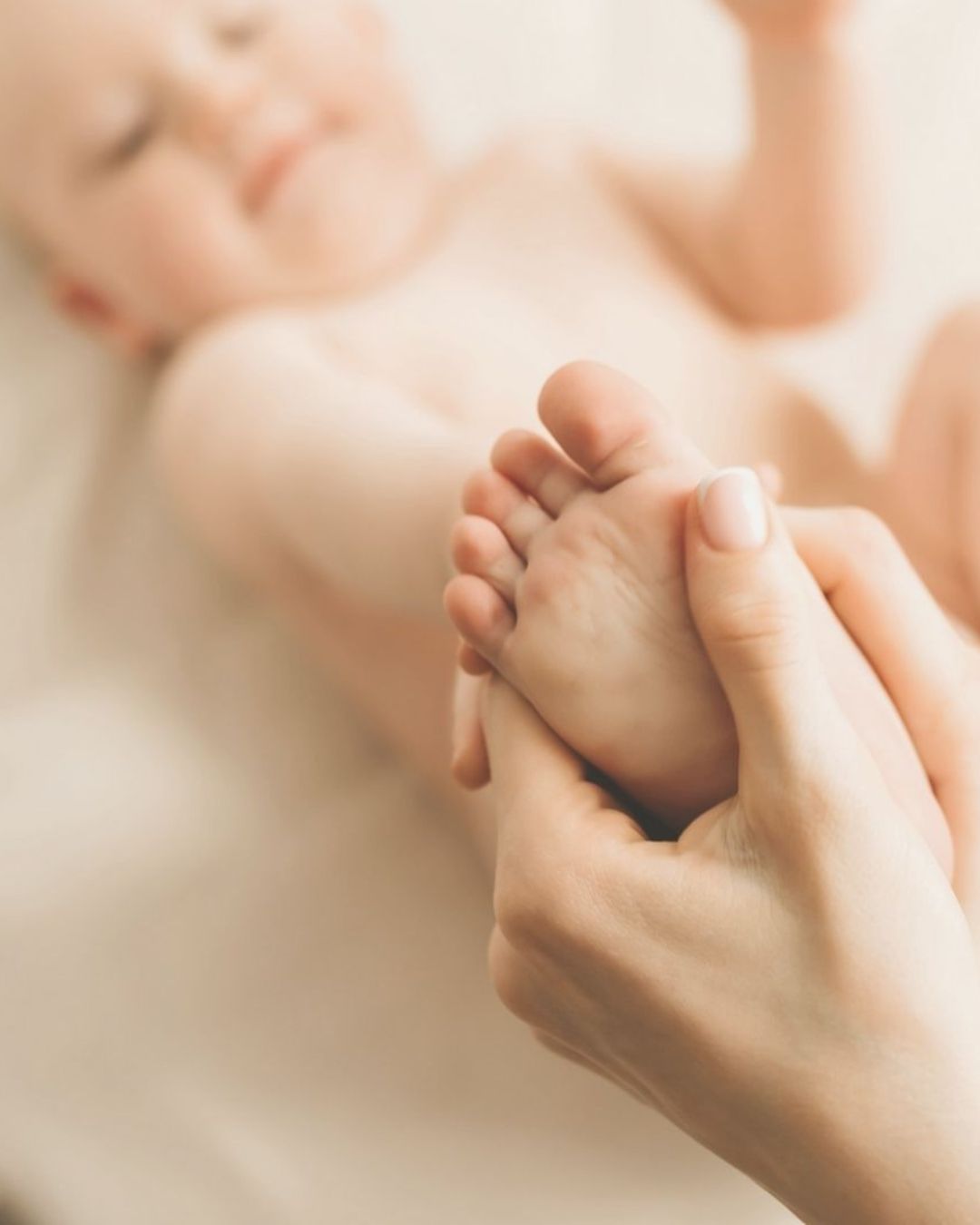
You can begin gentle, unhurried touch from birth, this is simply skin-to-skin, and it is encouraged from the very first hour where possible. Structured massage strokes, the kind I teach through Blossom & Berry and Here Mama, are traditionally introduced once the umbilical cord area has healed, usually in the first few weeks, and continue to be safe and beneficial right through toddlerhood. There is no upper age limit, and there is no need to wait for a special milestone. If your baby is full-term, healthy, and you are using gentle, unhurried pressure, you can begin whenever feels right for you both.
If your baby was born prematurely, or has a specific medical condition, this is exactly the situation where I want you to loop in your paediatrician first, not because touch is risky, but because timing and technique may need to be adapted to your baby specifically, and a qualified clinician is the right person to confirm that with you.
The part of the safety question nobody asks, but should
The real safety question is not “is touch safe”, the evidence on that is enormous and settled. The real question is what you’re touching your baby with. Newborn skin absorbs more of what touches it than adult skin does, which is exactly why the oil matters as much as the strokes. Look for something fragrance-free, nut-free, and free of essential oils, since a baby’s system is not ready for concentrated botanical compounds regardless of how “natural” they sound. A simple, cold-pressed, high-linoleic oil is both the gentlest and the most researched choice.
What this means for you tonight
You do not need permission to put your hands on your baby gently. The evidence says the opposite of what fear-based parenting culture often implies, this is not a risk to manage, it is one of the most protective things you can do. Start small: your open palm on your baby’s chest, still, for thirty seconds, is already touch doing its work. Everything else is simply an extension of that first hand.
With care, Gayle.