
Search self-care for new mums and you will find the same list, over and over: take a bath, light a candle, get your nails done, buy yourself flowers.
None of that advice is wrong, exactly. It’s just aimed at the wrong system.
A candle does not touch your vagus nerve. A manicure does not lower your cortisol. If you have tried the whole list and still feel just as wired, exhausted, and on edge as before, this is why, and here is what the research says actually works instead.
Self-care was never meant to mean pampering
Somewhere in its journey from a clinical term used by trauma therapists to a hashtag, self-care got quietly rebranded as indulgence, treats, pampering, a reward for surviving the week. But the original, clinical meaning of self-care is much simpler and much more physical: it means actively regulating your own nervous system. Not soothing your mood. Regulating your body. Those are not the same task, and only one of them actually changes how you feel by evening.
Three things that are proven to regulate a depleted nervous system
None of these require a babysitter, a budget, or an hour you don’t have.
Touch
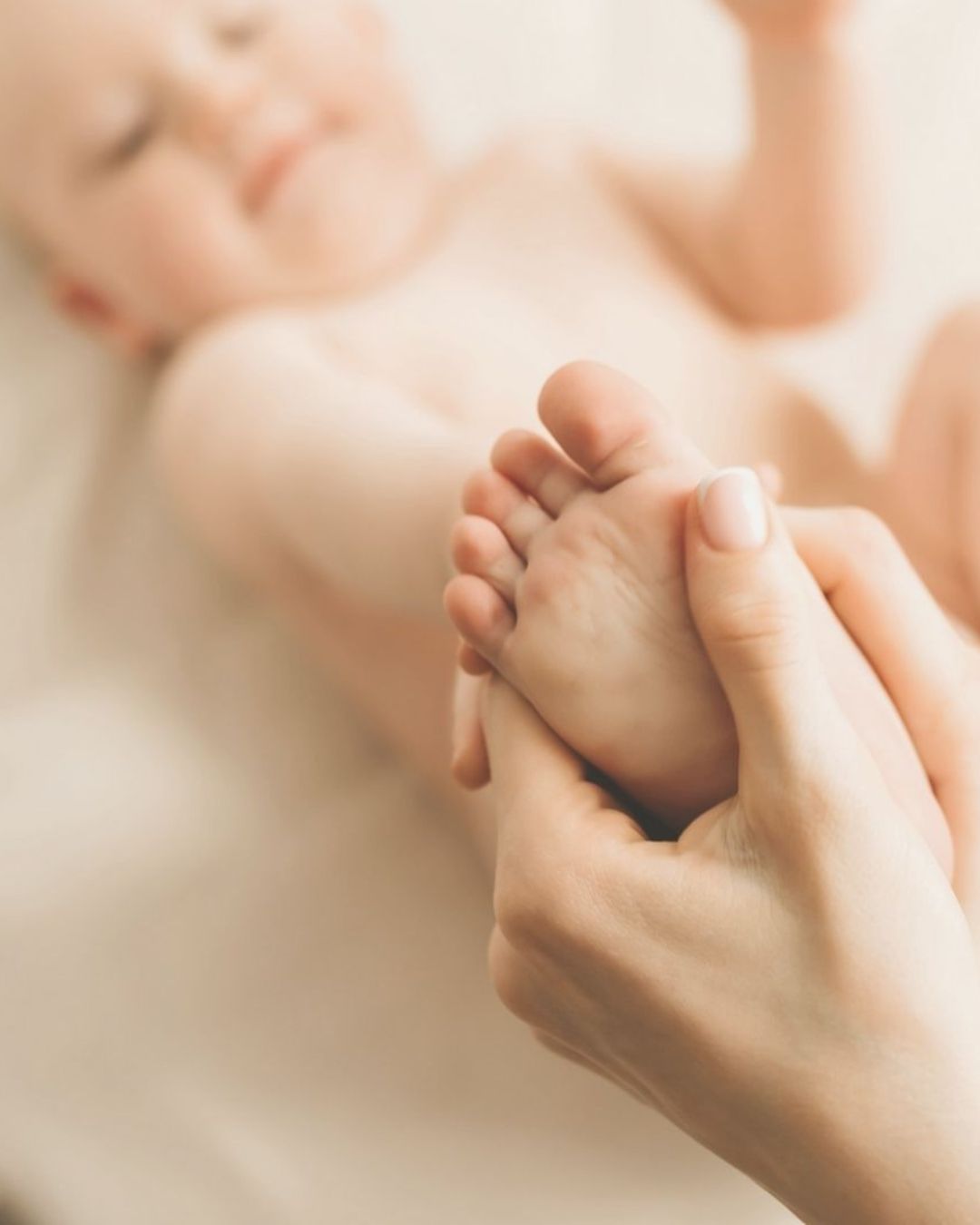
A single fifteen-minute session of moderate-pressure massage measurably increases parasympathetic, calming, activity and lowers cortisol, detectable on a heart-rate monitor after just one session. You do not need a spa for this. A slow hand on your own arm, a hug held a few seconds longer than usual, or a massage practice with your own baby all work through the same mechanism.
Breath
Slow, extended-exhale breathing increases heart-rate variability, a core marker of nervous-system regulation, within five to ten breaths. This is the fastest, cheapest, most accessible regulation tool that exists, and it is available to you in the fifteen seconds before you open your eyes each morning.
Nature
Here is the fact that tends to genuinely surprise mothers: just twenty to thirty minutes walking in a green space lowers cortisol by roughly 21% more than walking the same distance in an urban environment, a steeper effect than exercise alone produces. And it isn’t only a short-term effect. Large population studies have found that mothers living in greener neighbourhoods score significantly lower on standard postnatal depression scales than mothers in less green areas. Green space is not a nice-to-have backdrop for a walk. It is independently protective for your mental health.
Why movement-based support outperforms most self-care lists
Group-based mindful movement programmes for new mothers, the kind built around slow, shared movement rather than performance or fitness goals, have shown clinically meaningful reductions in maternal depression scores, roughly twice the effect size seen in comparison groups. That is the mechanism behind Here Mama’s approach to movement: not exercise as another task to complete, but slow, shared, regulating movement as actual medicine.
What this means for what you do this week
Not one more thing on the list. A replacement for three things on the list that were never going to move the needle. Instead of the bath you don’t have time for, try five slow breaths before you get up. Instead of the manicure you can’t book, try two minutes of your own hands on your arms or your baby’s back. Instead of squeezing in a gym session, try stepping onto the doorstep for ten minutes with your baby in your arms and looking at one tree.
You do not need more indulgence. You need less depletion.
Self-care, done properly, was never about treating yourself, it was always about tending your own nervous system with the same care you are learning to tend your baby’s. They run on the same three inputs: touch, breath, and nature. And every time you do one of these for yourself, your baby’s nervous system settles too, because it is still borrowing yours. That is love creates love, working in both directions at once.
With care, Gayle.