
This is the question I’m asked most in every beginner class, and it’s the right question to ask. Your baby’s skeleton is genuinely different from yours in ways that matter for how you move them, so let’s go through exactly what’s true, and exactly what to avoid.
Your baby’s skull: what the soft spot actually is
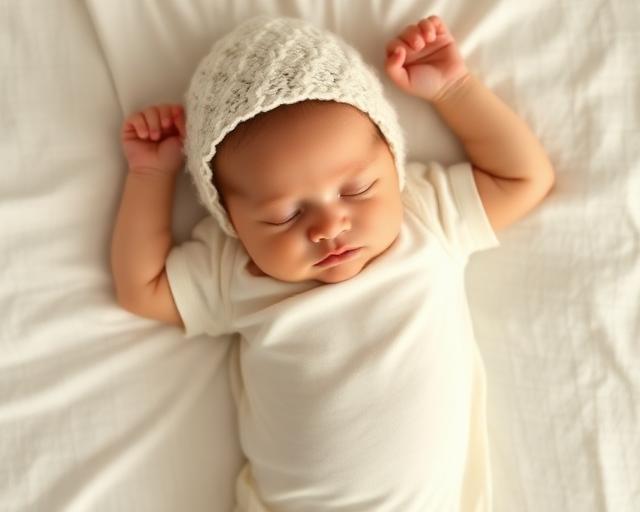
A baby is born with a fully formed skeleton, but the bone plates of the skull are not yet fused. This is not a defect, it’s what allowed your baby to travel safely through the birth canal without their skull being crushed or their brain compressed. The gaps between the plates, called fontanelles, remain open for around twelve to twenty-four months. The main one, at the top of the head, is what you know as the soft spot. The rule here is simple and absolute: never put any pressure on the head or skull during massage or movement. This is the one area with no gentle version of pressure, it is simply avoided.
Why your baby’s joints need a different kind of care
Babies are actually born with more bones than you have, around 300, compared to an adult’s 206, because many small bones (like those in the wrist) haven’t yet fused together. Combined with the fact that a baby’s skeleton is still largely cartilage, gradually hardening through a process called ossification, this means your baby’s joints are considerably more flexible than yours, and considerably less able to tell you when a stretch has gone slightly too far.
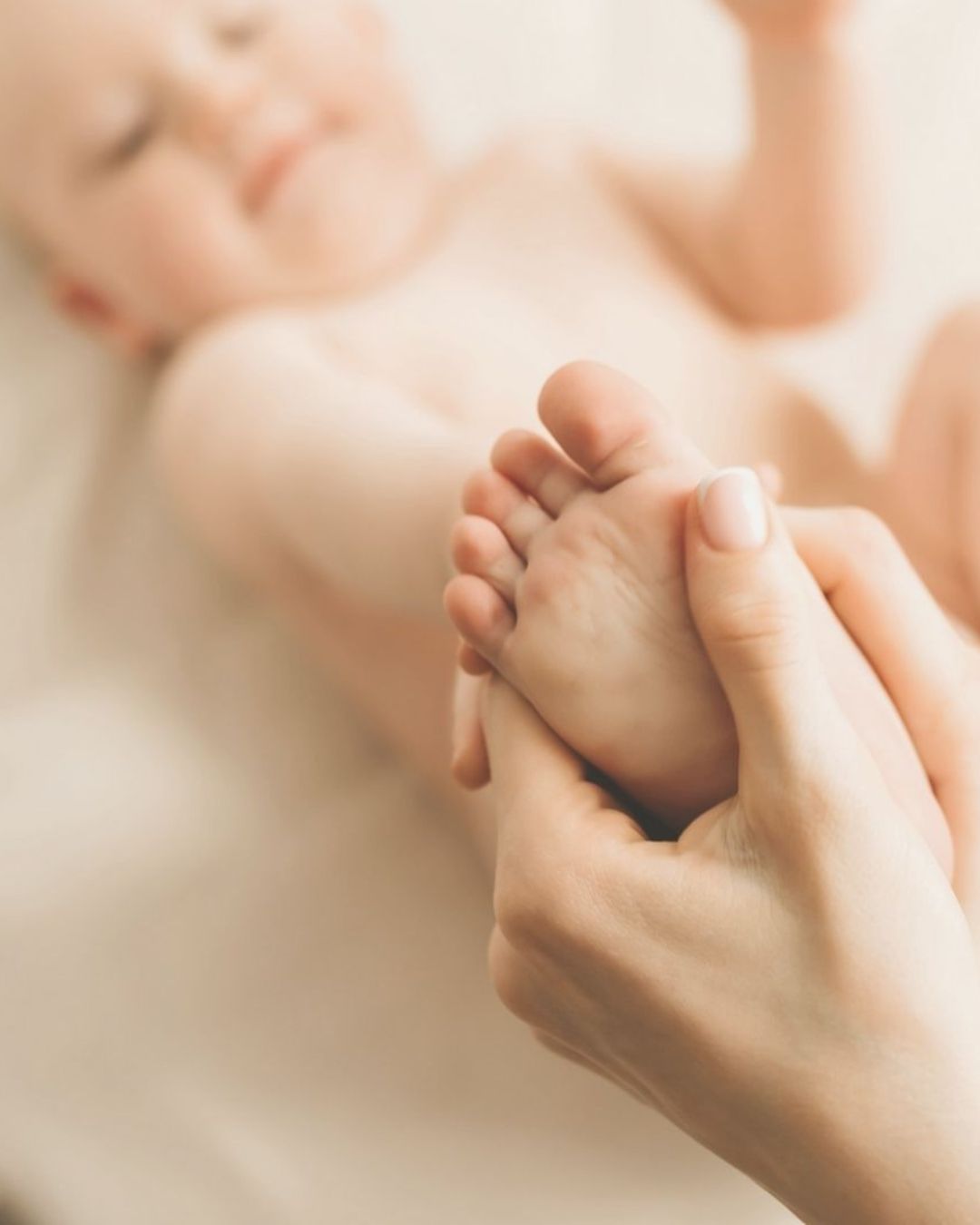
The rule that follows from this: strokes and movements should glide over the skin and joints, never push against them. There should be no pressure directly on the spine when working on the back, and stretches should always be gentle, smooth, and initiated slowly, never forced, never bounced, never pushed to a fuller range just because the joint allows it.
The one useful reframe: strong doesn’t mean fragile
It’s worth knowing that despite this flexibility, babies are actually quite strong from birth, with well-developed muscles, particularly around the chest to support the vital work of breathing. This isn’t a contradiction, a baby’s body is simultaneously more flexible and more resilient than most new parents assume, provided movement stays slow, gentle, and within the natural range their body offers rather than one you’re introducing from outside.
A simple checklist before you begin any session
No pressure on the head, skull, or fontanelles, ever. No pressure directly on the spine. Movements glide rather than push. Stretches are slow and smooth, never forced or bounced. If your baby resists, cries, or stiffens against a movement, stop, that is information, not something to work through.
When to check with your paediatrician first
If your baby was born prematurely, has a diagnosed hip condition, a connective tissue concern, or any other specific medical circumstance, please have this conversation with your paediatrician before beginning baby yoga, not because the practice is unsafe in general, but because your baby’s specific circumstances deserve specific guidance, and a qualified clinician is the right person to give it.
The reassurance to leave with
Followed slowly and gently, with the head and spine respected and nothing forced, baby yoga is safe from the earliest weeks of life. The safety isn’t in avoiding movement, it’s in moving with the specific, well-documented shape of your baby’s still-developing skeleton, rather than against it.
With care, Gayle.